
A high quality question and a willingness to be curious, patient and explorative leads the way to conscious growth. It's not easy, and, there are many practices and tools that make the journey efficient, pleasurable and balanced.
In calm observation and an openness to the present moment with loving awareness, we get access to coherence and harmony. Unfortunately, many human beings find themselves stuck thinking about thinking, feeling and acting in ways they do not truly desire, and an overall state of disharmony and chaos where wounds and triggers lead the way.

The stress response forces a consuming fixation on the physical body and the sense of "I" because you are prepared to fight for your life, run for your life or freeze/"play dead". Often what we perceive as "egotistical" is actually simply a pattern of protection resulting from an overactive brain that is seeking safety and sensing a whole lot of danger. The instinct for survival can get wrapped up in the expression and experience of oneself as "the center of the Universe."
When the Sympathetic Nervous System is chronically activated, not only do you lose connection to your ability to expand your perspective, you also disconnect from your ability to digest your food, heal your body, grow and evolve. When danger is at the forefront of your subconscious drive, you can only think or do what you have thought or done before.
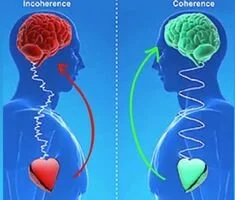
When someone is unconscious, all the same brain regions of a conscious person are firing and functioning, they're just no longer synchronized with each other. "Conscious" equates to an orchestra in harmony, while "Unconscious" equates to a cacophony. To be a conscious communicator requires a level of awareness that ensures you are grounded and receiving rhythmic breaths, curating harmony within your own body. In harmony, you will have space to listen, to ask more questions, to show love and support, to avoid assumptions or judgments, and to notice the unconscious reactions without feeding them and adding story to them. Ultimately, a sense of harmony allows us to choose love over fear.
The key here is daily practice. Find a practice that meets you where you are at, brings some pleasure and ease instantly as it doesn't venture too far off from what you already feel capable of. For example, I started with 30 seconds a day. It was the way for me to ensure that I would do it daily. After three months, I found myself engaging in 30 seconds of mindfulness (letting go of the external and moving in to meet my breath) throughout my day. This then led into feeling confident and capable to set a timer for 3 minutes each morning to just be with myself and notice the constant change moment to moment and day to day. This growth continued as I was generous and compassionate with myself throughout the process, and today I am meditating daily for longer than I had originally thought was possible for my ADHD mind. Small changes with persistence and consistency equates to massive growth and change.

There are many ways to practice daily mindfulness meditation, for example, breath awareness and pranayama techniques, embodiment practices of tracking sensation, witnessing and detaching from the over-identification of what arises, one-pointed focus on an object or emotion, moving mindfully to music or in yoga postures, guided visual journey, or using mantra to anchor in each moment. Within a few weeks, the Hippocampus increases its grey matter, which improves memory, learning, emotional regulation, sleep quality, and reduces pain. This area of the brain is generally found to be smaller (less grey matter) in people with depression and PTSD. There will also be increases in grey matter in the Temporal Parietal Junction which plays an important role in perspective (and shifts in perspective), empathy and compassion. As well, there will be a decrease in grey matter in the Amygdala, which correlates with overall stress reduction. People who struggle with chronic stress and anxiety have a larger Amygdala as it is being "exercised" more when there is more fear and emotional reactivity in one's life.
These changes all support our ability to expand the Window of Tolerance and optimize all functions within the body, leading to quicker recovery and regulation, higher quality energy and higher quality of life. What are you waiting for?